Thinking about what happens to your home after you pass away can bring up feelings of anxiety and uncertainty. We understand the emotional weight of estate planning, as a home is often a family’s most valuable and sentimentally cherished asset. You are not alone in wanting to ensure that your primary residence remains safe from creditors and transfers smoothly to your loved ones. By understanding Florida homestead protection, you can create a secure estate plan that brings lasting peace of mind to your family.
Understanding Florida Homestead Protection Basics
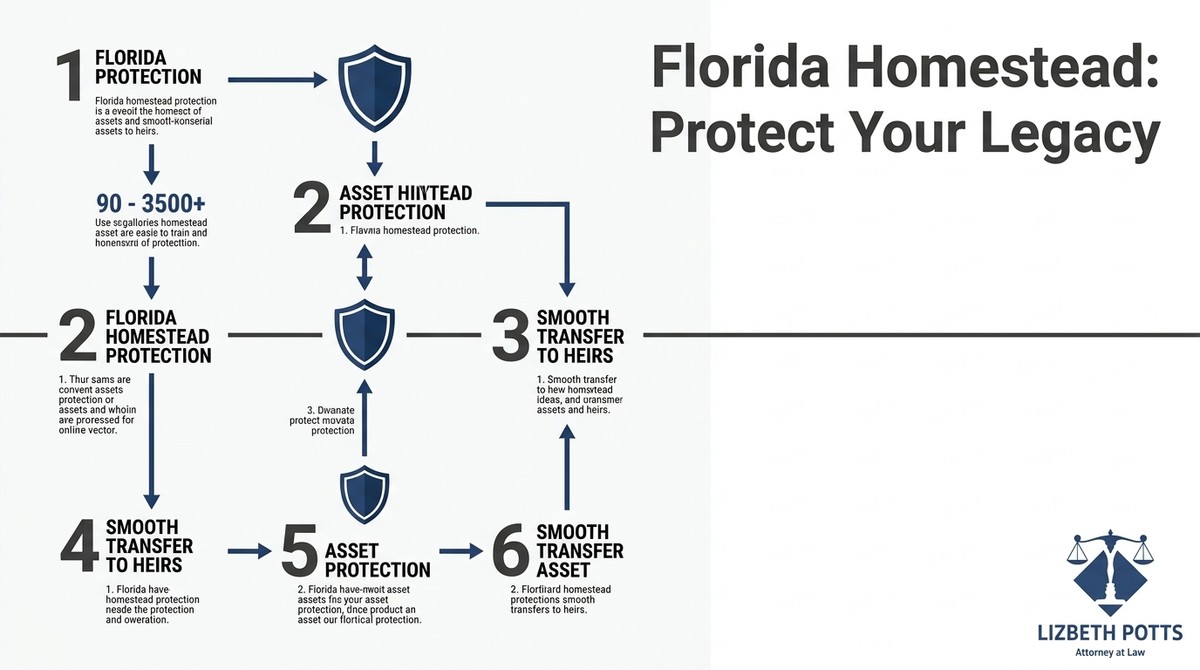
In the Sunshine State, the law provides significant benefits to homeowners, but these benefits require careful navigation to fully utilize. Florida homestead protection refers to the legal safeguards that shield your primary residence from forced sale by most general creditors. This means that if you face unexpected medical bills or credit card debt, those specific creditors cannot force the sale of your home to satisfy what you owe. Our team at Lizbeth Potts, P.A. often helps clients in Temple Terrace and Tampa understand the profound security this law offers.
It is vital to distinguish between the tax exemption and the creditor protection aspects of the homestead law. The property tax exemption, which lowers your annual property tax bill, is what most residents think of first when they hear the term homestead. However, the constitutional creditor shield is entirely separate and applies automatically to your primary residence regardless of whether you filed for the tax benefit. We strongly advise homeowners in Hillsborough County to consider both facets when reviewing their overall financial and estate plans.
How Florida Homestead Law Affects Your Heirs
When passing down your primary residence, the transition involves specific rules that are completely unique to Florida state laws. If you pass away, the creditor protection that shielded your home during your lifetime can seamlessly transfer to your qualified heirs. Qualified heirs typically include your spouse, children, or other close blood relatives who stand to inherit the property. Moving forward peacefully means structuring your estate so this transfer happens without unnecessary delays or exposure to previous debts.
Without a proper plan, the transfer of your home might be subject to the default rules of intestate succession, meaning the state decides who inherits your assets based on standard legal formulas. This default path can lead to unintended consequences, especially if you have a blended family or wish to leave the property to someone outside the standard line of succession. By crafting a clear and deliberate estate plan, our team ensures that your specific wishes are honored and your family remains protected. We believe in taking a proactive approach to keep you in control of your future.
Restrictions on Devising Your Primary Residence
While you have significant freedom to distribute most of your assets, Florida places strict limits on how you can leave your homestead upon your passing. The legal term for leaving property through a will is a devise, meaning the formal transfer of real estate to a designated beneficiary. If you are survived by a spouse or minor children, the Florida Constitution strictly prohibits you from devising your homestead to anyone else. These rules exist to prevent a family from being left homeless after the sudden loss of a primary provider.
Attempting to leave your home to a friend or an adult child when you have a minor child will result in an invalid devise. In such a scenario, the law steps in to correct the error, typically granting the surviving spouse a life estate, which is the right to live in the home for the rest of their life, while the descendants receive a remainder interest, meaning they inherit the property after the spouse passes away. Navigating these mandatory protections can feel overwhelming, but we are here to simplify the process. Together, we can design a strategy that respects these rigid constitutional constraints while still aligning with your ultimate family goals.
Strategic Estate Planning Tools for Homeowners
Achieving a smooth resolution for your family often involves utilizing specific legal instruments designed to bypass the complexities of the probate court. One popular option is a revocable living trust, which is a flexible legal entity you create to hold your assets during your lifetime and distribute them directly to beneficiaries after your death. Placing your primary residence into a trust can help avoid probate, provided the trust is drafted carefully to preserve the underlying homestead creditor protections. Our firm guides Tampa Bay area residents through the intricate process of funding trusts correctly to safeguard these crucial benefits.
Another highly effective tool is an enhanced life estate deed, commonly referred to as a Lady Bird deed. A Lady Bird deed is a special type of property transfer document that allows you to retain complete control over your home during your life while automatically passing it to your chosen beneficiaries upon your death. With this document, you reserve the right to sell, mortgage, or alter the property without needing the permission of the future inheritors. This approach provides a peaceful and highly efficient way to transfer real estate while fully maintaining your primary residence safeguards.
Dealing with Probate in Hillsborough County
If your home does not pass through a trust or a specialized deed, it will likely need to go through the probate process. Probate is the formal court-supervised procedure of validating a will, paying off final debts, and officially distributing the remaining assets to the rightful heirs. In Hillsborough County, navigating the local probate court requires submitting specific petitions and working closely with a judge to clear the property title. We understand that going to court during a period of grief is incredibly stressful, which is why we handle the heavy lifting for our clients.
During the probate administration, the personal representative of the estate must file a specific document known as a Petition to Determine Homestead Status. This formal legal request asks the judge to declare that the property was indeed the deceased person’s primary residence and is therefore exempt from creditor claims. Once the judge signs the corresponding order, the title is cleared, and the home safely passes to the heirs free from the deceased’s general debts. By partnering with Lizbeth Potts, P.A., you ensure that this crucial step is executed flawlessly to protect your family inheritance.
Common Pitfalls in Florida Homestead Protection
Even the most well-intentioned families can accidentally compromise their legal safeguards by making seemingly minor mistakes with their property title. A frequent error occurs when homeowners decide to add an adult child’s name to their deed in an attempt to avoid probate. Doing so immediately exposes a portion of your home to that child’s personal creditors, potential lawsuits, or divorce settlements. We caution all our clients to consult with experienced legal counsel before making any unilateral changes to their real estate deeds.
Another significant risk involves the concept of abandonment, which can inadvertently strip your home of its constitutional shield. If you rent out your primary residence on a long-term basis or move to another state with the intention of staying there permanently, you may lose your protected status. Florida courts closely scrutinize the intent to reside permanently in the home when determining whether the protections still apply. Our comprehensive reviews help you avoid these pitfalls, ensuring your assets remain entirely secure as your life circumstances evolve.
Frequently Asked Questions About Homestead Rights
We frequently receive questions from Tampa residents who want to ensure they are making the best possible decisions for their loved ones. A common inquiry is whether nursing home expenses or Medicaid recovery programs can force the sale of a protected homestead property. Generally, as long as the property passes to a qualified heir, it remains shielded from state recovery efforts for long-term care costs. Discussing these specific scenarios during your consultation will give you a clearer picture of your family’s exact legal standing.
Clients also frequently ask if a prenuptial agreement can waive the constitutional rights that a surviving spouse has to the primary residence. The simple answer is yes, a carefully drafted marital agreement can waive these specific homestead inheritance rights. A prenuptial agreement, which is a binding contract signed before marriage to dictate financial terms, provides clarity and prevents future disputes. We are highly experienced in drafting these documents to ensure they meet all strict legal requirements while promoting lasting family harmony.
Securing Your Future with Lizbeth Potts, P.A.
Planning for the future does not have to be an overwhelming or intimidating endeavor when you have the right support system. We believe that protecting your family should bring you comfort, clarity, and a profound sense of relief. By taking proactive steps today, you ensure that your primary residence remains a source of security rather than a burden for the people you cherish most. Our dedicated team is fully committed to providing the compassionate and knowledgeable guidance you deserve throughout this journey.
You do not need to navigate the complexities of property law and probate on your own. We invite you to sit down with us and discuss how we can tailor an estate plan to your unique situation. Schedule your consultation today to protect your family’s future by calling 813-988-9190. We look forward to helping you move forward peacefully and confidently with our unified legal team by your side.