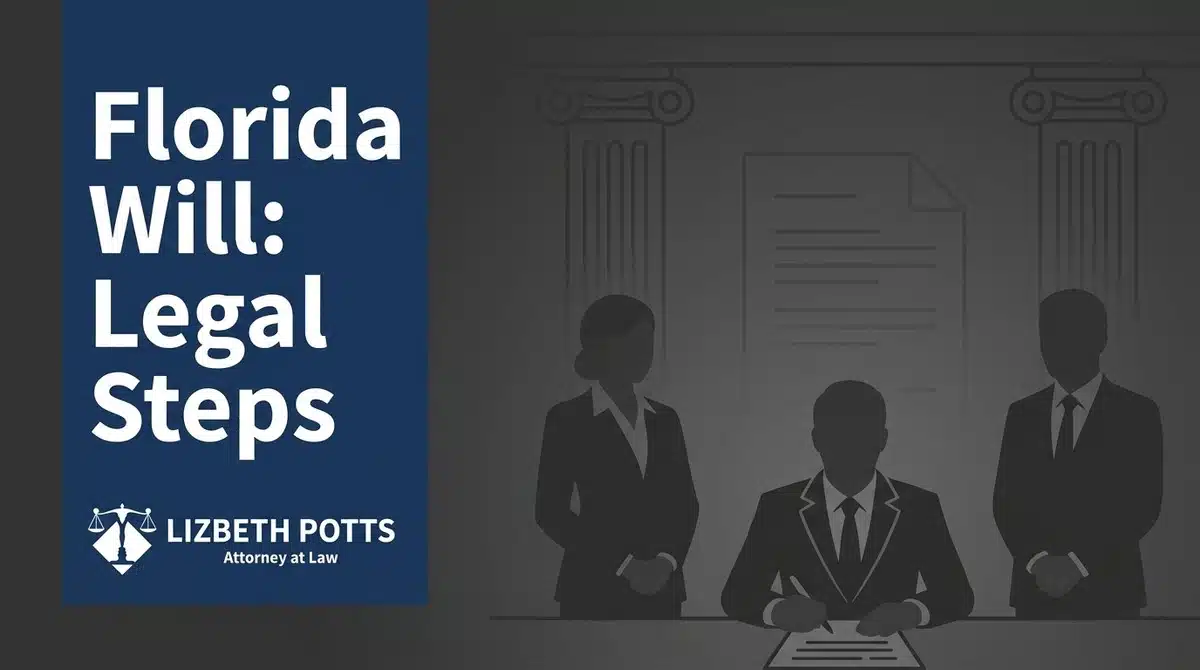
We know that contemplating the end of life and formalizing your final wishes carries a significant emotional weight. If you are wondering what the exact steps are to write a Florida will, the law requires that the document must be in writing, signed by the maker at the physical end of the document, and witnessed by two individuals who sign in the presence of the maker and each other. Meeting these strict execution requirements is the only way to ensure your wishes are legally binding in the eyes of the court. Our team at Lizbeth Potts, P.A. understands the complexities of this transition and is dedicated to helping Tampa Bay residents secure their family’s future with complete peace of mind.
Table of Contents
Navigating the emotional weight of estate planning
You are not alone in feeling overwhelmed by the prospect of planning your estate. For many families in Temple Terrace and across Hillsborough County, the thought of mortality brings up difficult emotions and complex family dynamics. We approach these matters by leading with compassion and validation, knowing that a well-crafted estate plan is ultimately an act of deep love. By taking control of your assets now, you are shielding your loved ones from future conflict and confusion.
Our firm believes in moving forward peacefully, which is why we emphasize clear communication and careful legal strategy. A properly executed document prevents your family from enduring a stressful, prolonged legal process during an already grief-stricken time. When you work with our compassionate legal professionals, we shoulder the technical burdens so you can focus on what truly matters. Protecting your family’s future is a collaborative effort, and we are here to support you every step of the way.
Key legal requirements to write a Florida will
To successfully write a Florida will, you must adhere strictly to the formalities outlined in Chapter 732 of the Florida Statutes. These rules are not mere suggestions; they are absolute mandates designed to prevent fraud and ensure that the document truly reflects the maker’s voluntary intentions. The person creating the document, known legally as the testator, must possess sound mind and be at least eighteen years of age. Without meeting these baseline criteria, any subsequent legal maneuvering will likely be rejected by the court.
The execution process itself is highly formalized to protect all parties involved. Every technical detail, from where the signature is placed to who is standing in the room, matters immensely in the eyes of a judge. We translate these rigid Florida family and probate laws into plain English so that our clients fully understand the mechanics of their own estate plans. Ensuring these steps are followed flawlessly is how we guarantee a smooth resolution for your family later on.
Why the document must be in physical writing
Under Florida law, oral wills are entirely invalid, regardless of how many people heard your spoken wishes. The document must be in a tangible, written format, which can be typed, printed, or even handwritten, provided all other execution formalities are met. However, it is crucial to understand that Florida does not recognize what is called a holographic will, which is a handwritten document that lacks the proper witness signatures. Even if a handwritten document is entirely in your own handwriting and clearly states your desires, it will be dismissed by a Hillsborough County judge if it bypasses the state’s strict execution requirements.
This requirement for a physical, properly witnessed document provides a permanent, undeniable record of your intentions. When dealing with complex family structures or substantial assets in the Tampa Bay area, relying on informal written notes is a dangerous gamble. Our team at Lizbeth Potts, P.A. ensures that your written document is drafted with precision, leaving no room for misinterpretation or legal challenges. We believe in crafting solid, reliable foundations that protect your hard-earned assets.
The critical importance of signing at the end
A seemingly minor detail that frequently derails estate plans is the placement of the maker’s signature. Florida law specifically dictates that the testator must sign at the physical and logical end of the document. If you place your signature in the margin, at the top, or anywhere before the final substantive clause, the court may declare the entire document invalid. This rule exists to prevent anyone from adding unauthorized clauses or gifts after the document has been officially signed.
If you are physically unable to sign the document yourself, the law provides a compassionate alternative. You may direct another person to sign your name for you, provided they do so in your presence and under your explicit direction. We carefully oversee this proxy signing process for our clients to ensure no claims of undue influence can be raised later. Securing the signature properly is a fundamental step in ensuring your future is protected without unnecessary legal battles.
Understanding strict witness requirements
The presence and participation of witnesses is perhaps the most heavily scrutinized aspect of a valid estate plan. You must have exactly two competent witnesses present when you sign your document, or when you acknowledge that you previously signed it. Furthermore, these two witnesses must sign the document in your presence and in the presence of each other. This is often referred to as the conscious presence test, meaning all three parties must be aware of each other’s actions and physically together during the signing.
If one witness steps out of the room to take a phone call while the other signs, the entire execution is legally compromised. The witnesses are there to attest that you were of sound mind, acting voluntarily, and that they actually saw you endorse the paperwork. We always recommend using disinterested witnesses, meaning people who do not inherit anything under the document, to avoid any perception of a conflict of interest. Our Tampa-based legal team orchestrates this signing ceremony with absolute precision to safeguard your family from future disputes.
What is a self-proving affidavit in probate?
While not strictly required to make the document valid, adding a self-proving affidavit is a vital step that saves your family immense time and trouble. A self-proving affidavit is a sworn, notarized statement attached to the end of the document, signed by you and your witnesses, declaring that all legal formalities were properly followed. When this affidavit is present, the document becomes self-proving in court, meaning the judge will accept it without requiring your witnesses to testify. Probate, which is the court process of distributing your assets and paying your final debts, is significantly streamlined when this document is included.
Without a self-proving affidavit, a Hillsborough County judge will require the original witnesses to be tracked down to sign an oath before the court can proceed. Years or even decades may pass between the signing and the eventual court proceedings, making it incredibly difficult to locate witnesses who may have moved away or passed on. By taking the time to notarize this affidavit with our team, you are granting your loved ones the gift of an efficient, peaceful transition. We prioritize these thoughtful, preemptive strategies to shield your family from unnecessary administrative burdens.
Common technical mistakes that invalidate a will
The probate courts in Florida are bound by strict statutory rules, meaning they cannot overlook execution errors out of sympathy for a grieving family. A simple technical mistake, such as having only one witness or failing to sign in each other’s presence, will render the document completely void. When a document is invalidated, the state of Florida treats your estate as if you died intestate, meaning you died without any estate plan at all. In these tragic scenarios, state law dictates who receives your assets, which often contradicts what you actually wanted.
Another frequent error occurs when individuals attempt to amend their plans by crossing out words or writing new instructions directly onto the original pages. These informal alterations do not meet the execution requirements and will cause severe confusion during the court process. If changes are necessary, they must be made through a formal amendment called a codicil, which requires the exact same signing and witnessing formalities as the original document. Relying on professional estate planning guidance is the most reliable way to avoid these devastating pitfalls and keep your family unified.
Frequently Asked Questions
Do I need an attorney to draft my estate planning documents?
While the state does not legally mandate that you use an attorney, navigating the rigid execution laws without professional guidance is highly risky. We have seen countless families face agonizing court battles because a do-it-yourself document failed a basic technical requirement. Having our experienced team verify that everything is drafted and signed correctly ensures your legacy is fully protected.
Can my spouse be one of the two required witnesses?
Florida law does not explicitly forbid a beneficiary or a spouse from serving as a witness, but doing so is heavily discouraged. Using an interested party opens the door for other family members to claim undue influence or fraud during the court proceedings. We always provide neutral, professional witnesses at our Temple Terrace office to ensure your plan remains entirely beyond reproach.
What happens if I move to Florida with a document signed in another state?
If your out-of-state document was executed in strict compliance with the laws of the state where it was signed, Florida will generally recognize it as valid. However, this exception does not apply to holographic or spoken plans, which remain invalid here regardless of their origin. We strongly advise having our team review your out-of-state documents to confirm they align seamlessly with current Florida statutes.
Protect your family’s future with our compassionate guidance
Dealing with estate planning and the formalities of the law does not have to be an isolating or stressful experience. Our dedicated team at Lizbeth Potts, P.A. is committed to bringing you peace of mind through careful, personalized legal strategy. We understand the complexities of this transition and will handle the technical details so you can focus on enjoying life with your loved ones. Schedule your consultation today to protect your family’s future; call us at 813-988-9190 to take that empowering next step.